Permanent eyebrow makeup – a complete guide before your first treatment
 Author: Tsvety Bita, permanent makeup specialist
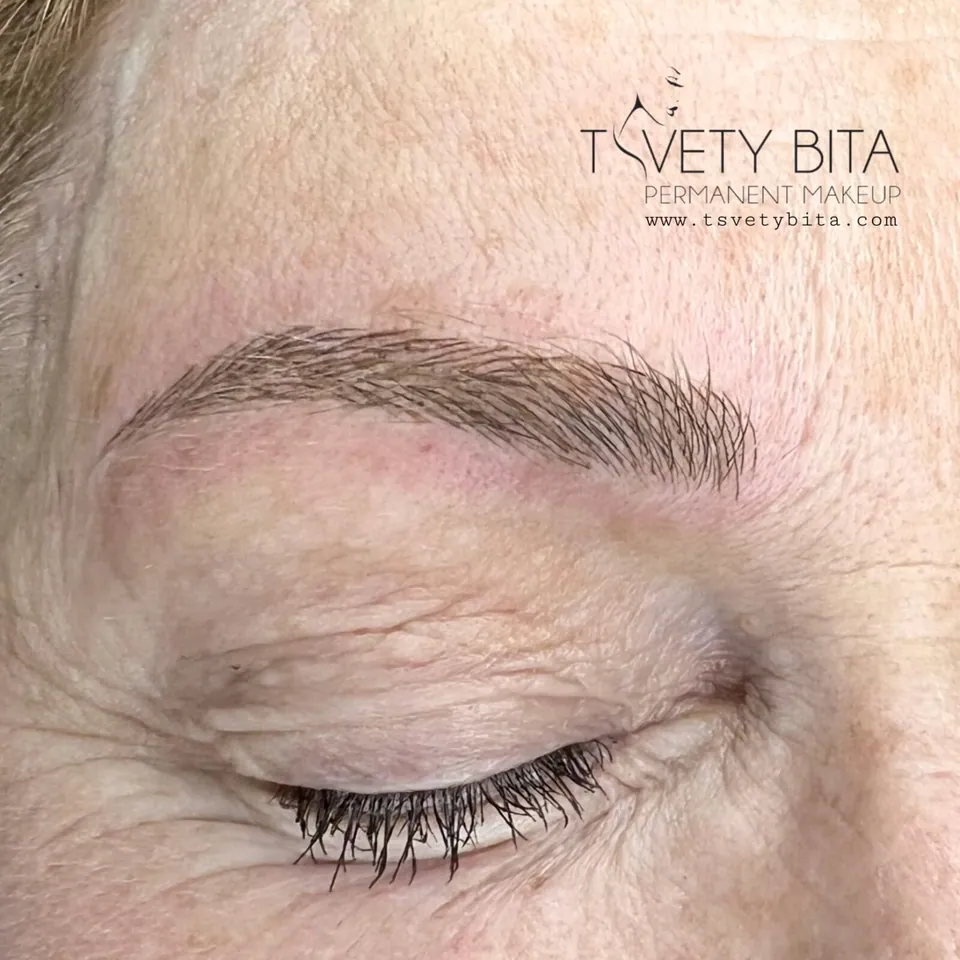
Permanent eyebrow makeup can frame the face, restore missing areas and save time on everyday makeup. A good result, however, does not start with choosing a photo from the internet, but with a proper consultation, realistic expectations and a technique tailored to your skin and natural hairs.
What permanent eyebrow makeup is
During the treatment, pigment is introduced in a controlled way into the surface layers of the skin. The aim is not for the brows to look heavily drawn on, but to create a shape that sits harmoniously with the eyes, forehead and proportions of the face.
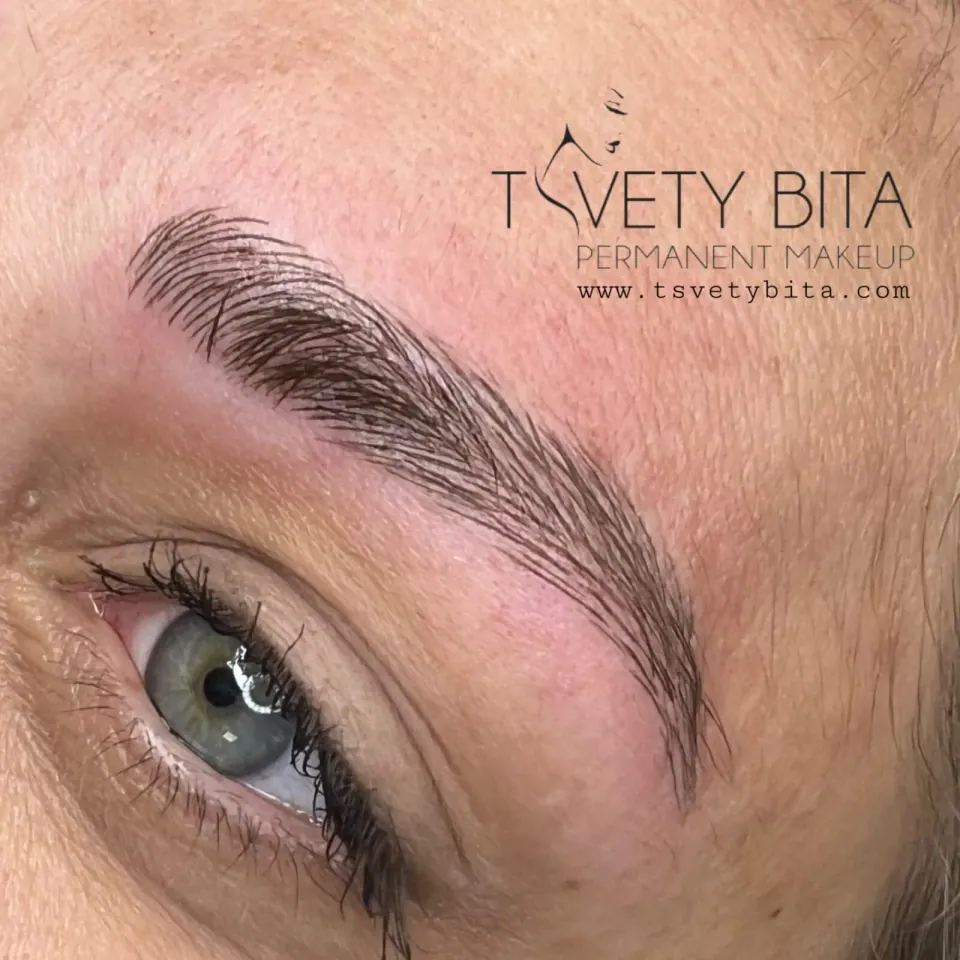
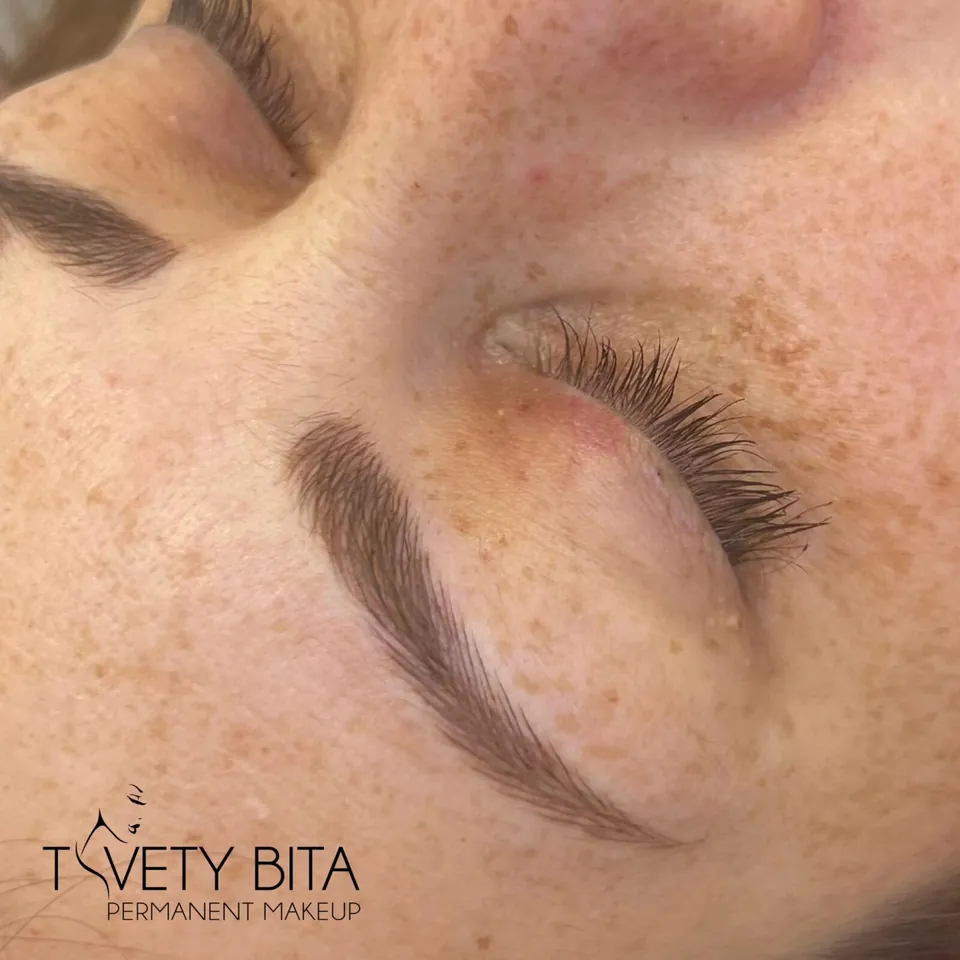
The technique may be a powder effect, an ombré blend, machine hair strokes, microblading or a combination. The choice depends on skin type, existing natural hairs, any previous pigment and the visual effect you are after.
- Powder brows – a soft made-up effect with smooth intensity.
- Hair strokes – visually filling in missing areas.
- Combination technique – hair strokes with soft shading.
- Correcting old pigment – only after assessing its colour and depth.
How the right shape and colour are chosen
The preliminary design is drawn before pigmentation. Key points are measured, but the template should not be followed mechanically. The two halves of a human face naturally differ, and the aim is visual balance, not mathematically identical lines.
The colour is chosen according to your skin's undertone, the natural colour of your hair and brows, and how the pigment is likely to change during healing. Starting with a colour that is too dark is rarely a good idea, because in the first days the result looks more intense anyway.
- Bring photos of results you like, but accept professional adaptation.
- Do not pluck your brows right before the consultation.
- Tell us about old permanent makeup, treatments and skin sensitivity.
Preparation, treatment and healing
Before the treatment it is important to discuss medication, skin conditions, allergies and recent aesthetic procedures. Do not change prescribed therapy without your doctor's advice. On the day of the treatment, the skin should be calm, with no sunburn, active rash or injury.
After the treatment the colour is stronger and the area may be slightly red. Over the following days there is gradual calming, fine flaking and fading. Do not pick scabs or flakes, because this can pull out pigment and leave patchy areas.
- Follow the cleansing and aftercare product instructions exactly.
- Avoid swimming pools, saunas, heavy sweating and direct sun for the specified period.
- Do not apply makeup on the unhealed area.
- Assess the final colour only after the skin has fully recovered.
Touch-up and longevity
A touch-up is not a sign of a failed treatment. Skin holds pigment individually, and after the first healing there may be lighter areas or a small adjustment of intensity may be needed. The decision is made once the skin is completely calm.
Longevity depends on skin type, metabolism, sun, skincare products and technique. Gradual fading is normal and desirable, because it allows the shape and colour to be adapted over time.
- Oily skin usually fades faster and blurs fine strokes.
- Sun protection helps preserve the colour.
- Acids, retinoids and aggressive peels around the brows speed up fading.
Frequently asked questions
How long does the treatment take?
The time includes the consultation, design, colour selection and the pigmentation itself. The exact duration depends on the technique and the condition of the area.
Can it be done over old permanent makeup?
Sometimes, yes, but the residual colour, shape and intensity must be assessed first. If the old pigment is too dark or unsuitable, lightening may be needed first.
When can the final result be seen?
After full healing and once the colour has settled. The first days are not indicative of the final intensity.
The most accurate recommendation is made after an individual consultation and an assessment of your skin, natural hairs, shape and desired result.
See the right treatment or book a consultation.
This article was prepared by Tsvety Bita and is for information only.
Have questions or would like a consultation?
Book now