How long does microblading last and what makes it fade?
 Author: Tsvety Bita, permanent makeup specialist
There is no single time frame that applies to everyone. Microblading fades gradually, and how visible it stays depends on skin type, lifestyle, aftercare, the skincare products you use and individual healing.
How the result changes over time
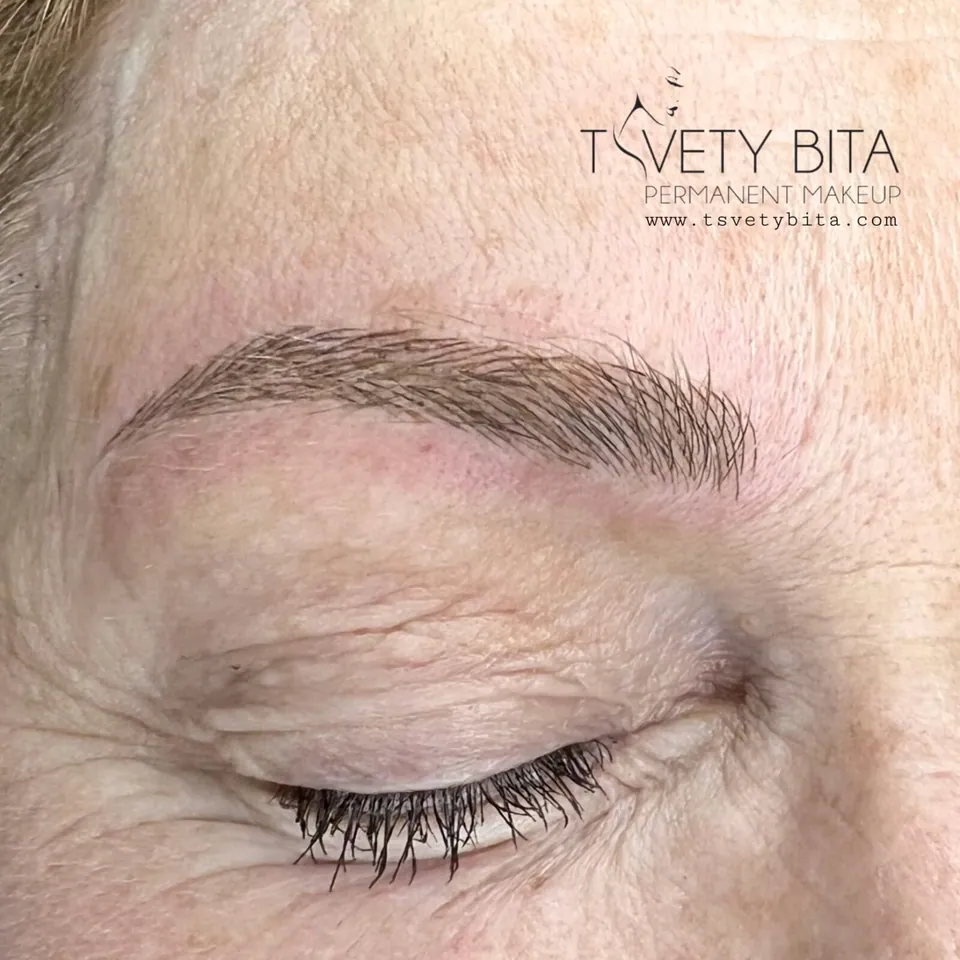
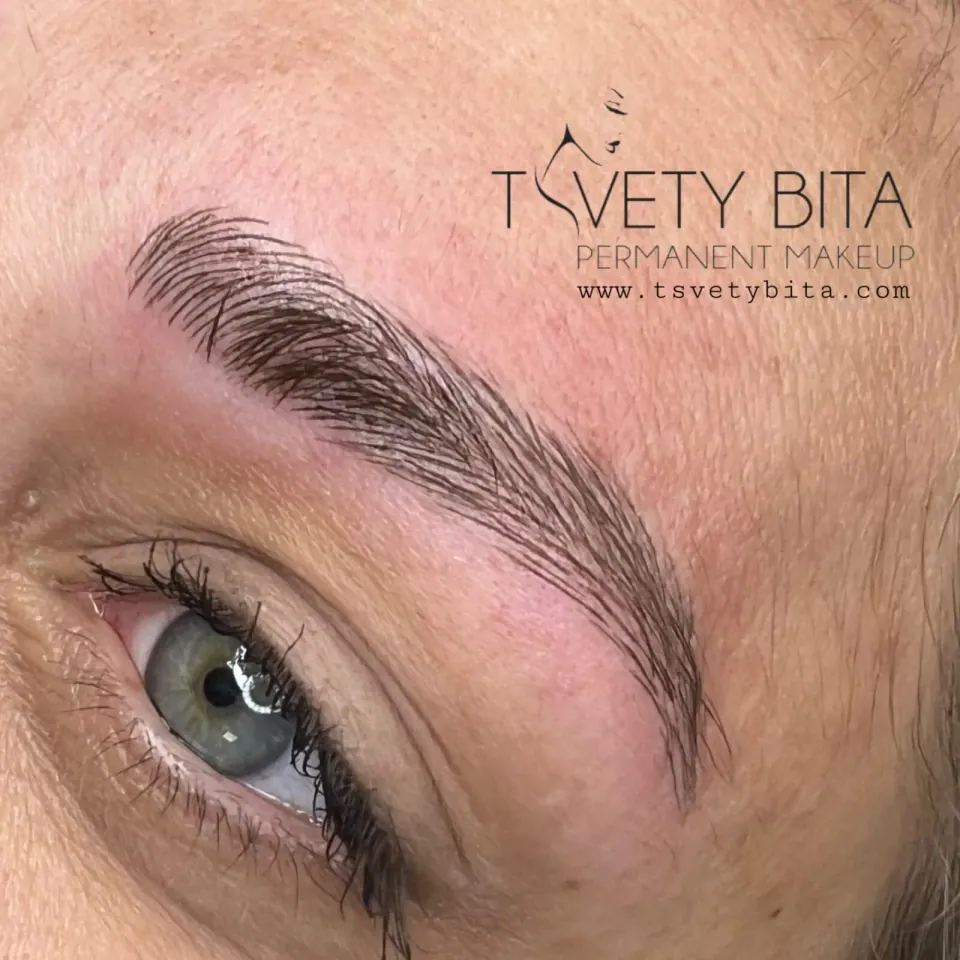
Right after the treatment the strokes are darker and sharper. During healing the colour softens, and at some point it may look temporarily very light. Once the skin has settled, the pigment actually retained is assessed.
Over the months the strokes gradually lose contrast. This is a normal process. The aim of good permanent makeup is not to stay unchanged forever, but to fade in a controlled way so that the shape can be adapted.
- In the first days the colour is stronger.
- After flaking there may be a temporary optical loss of colour.
- The final assessment is made after full recovery.
Skin type is a key factor
On normal and dry skin, fine strokes usually stay clearer. On oily skin, natural oils and more active surface renewal can speed up fading and reduce definition.
Pores, scars, sensitivity and previous treatments also matter. That is why someone else's result cannot accurately predict how your skin will behave.
- Oily skin – faster loss of sharpness.
- Dry skin – often clearer retention of the strokes.
- Mature skin – a gentle approach and a suitable technique are needed.
How everyday habits affect longevity
Strong sun is one of the most important factors in changing the pigment. Regular sun protection after full healing helps it fade more slowly.
Retinoids, acids, chemical peels and laser treatments near the brows can speed up skin renewal. Your skin specialist should know you have permanent makeup so they avoid treating the area directly.
- Use sun protection after healing.
- Do not apply strong active ingredients directly to the brows.
- Protect the area during professional peels and laser treatments.
When to plan a refresh
Maintenance is done when the shape has visibly faded, not necessarily on a fixed schedule. Layering too often can build up pigment and make future corrections harder.
The best moment is determined after a check-up. Sometimes only a light refresh is needed; in other cases it is wiser to wait longer.
- Do not have maintenance just because a certain date has passed.
- Assess the colour in daylight.
- If an old shade is unwanted, correction or lightening may be needed rather than a new layer.
Frequently asked questions
Can microblading disappear completely?
Over time it can become almost invisible, but on some skin a fine residual tint remains. This depends on the pigment, the depth and the individual skin.
Do more frequent touch-ups make the result last longer?
Not necessarily. Layering too often can make the area denser and less natural-looking.
Is sun protection important?
Yes. After full healing it is one of the most useful everyday measures for preserving the colour.
The most accurate recommendation is made after an individual consultation and an assessment of your skin, natural hairs, shape and desired result.
See the right treatment or book a consultation.
This article was prepared by Tsvety Bita and is for information only.
Have questions or would like a consultation?
Book now