Scalp micropigmentation for women and men – how it works
 Author: Tsvety Bita, permanent makeup specialist
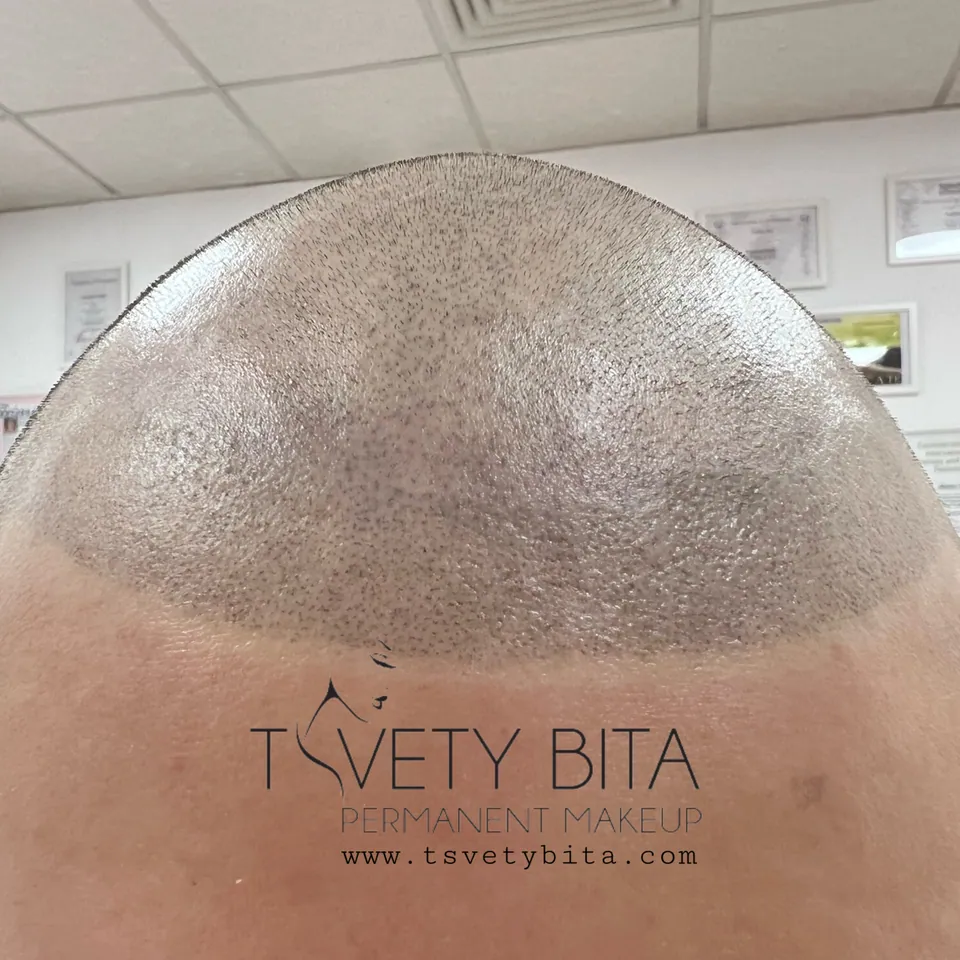
Scalp micropigmentation creates a visual illusion of greater density using many tiny pigment dots. It does not restore hair growth, but it can reduce the contrast between hair and skin and camouflage certain scars.
When it is used
With short hair, the technique can imitate the look of follicles and create a more even hairline. With longer thinning hair, the aim is to reduce how visible the light scalp is between the hairs.
It can also be done over some scars after a transplant or injury, but scar tissue takes pigment differently, so the result must be planned carefully.
- Thinning hair and a visible scalp.
- Balding with a short haircut.
- Scars, after the tissue has been assessed.
- Visual density – not a treatment for hair loss.
How a natural hairline is planned
The hairline should not be too low, too straight or too dark. A natural look is achieved with soft, irregularly spaced dots and a gradual transition.
Age, head shape, the current pattern of hair loss and how it may develop are discussed in advance. An overly aggressive hairline can look unnatural over time.
- A soft, broken front line.
- Density built up gradually in layers.
- Taking future changes in the hair into account.
How many sessions are needed
The result is usually built in stages. The first session lays the foundation, and the following ones add density and balance the areas after healing.
A staged approach gives better control over colour and distribution. Trying to reach maximum darkness in one go increases the risk of a heavy, flat look.
- The number of sessions is individual.
- There must be time to heal between them.
- The colour is assessed after healing, not immediately.
Aftercare and long-term maintenance
In the early period, avoid heavy sweating, shaving over unhealed skin, swimming pools, saunas and direct sun, as instructed. Do not use harsh products on the area.
Sun protection is especially important because the scalp is often directly exposed. Over time a refresh may be needed, but it is done only after the fading has been assessed.
- Keep the area clean and do not scratch it.
- Use sun protection once healed.
- Do not see micropigmentation as a medical treatment for hair loss.
Important: If you have active hair loss, a skin condition or an unexplained change in your scalp, see a dermatologist first.
Frequently asked questions
Does micropigmentation make hair grow?
No. It is a visual camouflage technique and does not stimulate the follicles.
Does it look natural up close?
With the right dot size, colour and distribution, the result can be very discreet. Work that is too dark and too uniform looks less natural.
Can it be done over a scar?
Sometimes, yes, but the scar must be fully healed and assessed, because the tissue holds pigment differently.
The most accurate recommendation is made after an individual consultation and an assessment of your skin, natural hairs, shape and desired result.
See the right treatment or book a consultation.
This article was prepared by Tsvety Bita and is for information only.
Have questions or would like a consultation?
Book now